-
 (+886)4-735-0011
Free Call
- 08:00 AM - 05:00 PM Monday - Friday
- No. 68, Dongping Rd., Hemei Township Changhua County 508, Taiwan
(+886)4-735-0011
Free Call
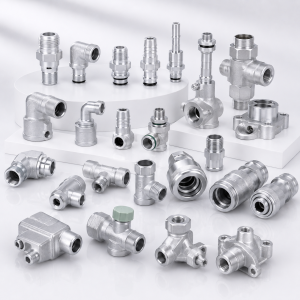
In-house 500/800-ton forging presses and CNC turn-mill precision machining, with full quality control using CMM, Rockwell hardness testers and other instruments. Integrated production from forging and machining to inspection delivers stable, traceable quality.
King Forging provides OEM/ODM custom manufacturing of lightweight aluminum alloy piping and precision connectors for fire protection equipment and systems. Integrating die development, aluminum alloy forging, CNC precision machining and surface finishing, we develop aluminum pipe fittings, connectors, adapters and other precision components for fire protection equipment based on your drawings, piping layout and actual operating conditions.
Fire protection equipment and suppression systems usually consist of storage units, control equipment, valves, piping and discharge devices. Piping and connectors carry the agent through the system and link the equipment together, so beyond basic structural performance they must also take into account weight, pressure resistance, airtightness, dimensional accuracy, corrosion resistance and ease of installation.
In fire protection applications with weight or space constraints, the right materials and structural design make lightweight piping and components possible. Aluminum alloys are light, corrosion-resistant and easy to machine, and can be evaluated for fire protection piping and connectors based on the actual pressure, agent, environment and applicable regulations.
King Forging has integrated manufacturing capability, from die design and aluminum alloy forging to CNC turning and milling and surface finishing. Based on your 2D/3D drawings, CAD models or physical samples, we carry out OEM/ODM custom development and production of lightweight aluminum alloy parts for fire protection equipment.
Piping layouts in fire protection equipment vary with the type of suppression system, equipment space, agent, working pressure and installation method. For equipment that needs to be lighter, we can evaluate custom manufacturing of aluminum alloy piping, fittings and related precision connectors based on your drawings and operating conditions.
The actual material, pipe diameter, wall thickness, hole positions, threads, working pressure and machining tolerances must be evaluated against the equipment design, agent, operating environment and applicable regulations.
For mobile or special fire protection equipment, or applications with space and load limits, the weight of piping and connectors affects the overall equipment layout. Aluminum alloys and the right structural design can reduce the weight of some piping and components while still meeting performance requirements.
Fire protection piping and connectors may need to withstand internal pressure in service, so lightweighting cannot simply mean using less material. Material performance, wall thickness, geometry and connection method must all be considered. With suitable aluminum alloys, forging and precision machining, the structure and process can be planned around the product's conditions.
Pipe fittings, adapters and valve connections are where piping is assembled and the agent flows through, so the accuracy of bores, threads, sealing faces and mating dimensions is critical. CNC turning and milling machine flow passages, bores, threads and sealing faces precisely to your drawings.
Fire protection equipment may stay on standby for long periods, so parts must keep their dimensions and structure stable while withstanding corrosion from the operating environment. Aluminum alloys are naturally corrosion-resistant and can be given suitable surface treatment as needed, while lighter weight eases handling, assembly and installation.
King Forging integrates die development, aluminum alloy forging, precision machining and post-processing. Based on the design requirements of fire protection piping and parts, we evaluate materials, structure and machining methods, helping customers develop custom components that balance light weight, dimensional accuracy and product performance.
Using your 2D/3D drawings, CAD models or physical samples, we confirm the structure, dimensions, material, wall thickness, operating conditions and secondary machining needs of the piping and parts.
Dies are planned around the part's shape, material flow, structural performance and secondary machining needs, and aluminum alloy forging produces forgings that meet the product's structural requirements.
CNC turning and milling equipment completes flow passages, precision bores, threads, sealing faces, mounting faces and other special geometric features.
Based on material properties, operating environment and product requirements, we select suitable surface and post-processing to complete fire protection pipe connectors and related aluminum alloy components.
Fire protection equipment differs in suppression agent, piping layout, working pressure, installation space and operating environment, so the related piping, fittings and connectors usually need to be custom-developed from the equipment design and product drawings.
King Forging's main service model is OEM/ODM custom aluminum alloy parts manufacturing. Starting from drawing review and material and process evaluation, we integrate die development, trial sampling, aluminum alloy forging, CNC precision machining and post-processing.
Whether you need lightweight piping for fire equipment, aluminum alloy pipe fittings, valve connection parts, adapters, mounting parts or other special aluminum precision components, we can evaluate manufacturing feasibility based on your drawings, product conditions and actual requirements.
If you are developing lightweight piping, pipe fittings, valve connection parts, adapters or other aluminum precision components for fire protection systems, send us your 2D/3D drawings, CAD models or physical samples, and King Forging will evaluate the materials, dies, aluminum forging and CNC precision machining processes.